
Is Laser Hair Removal Painful? What to Expect

Table of Contents
Is Laser Hair Removal Painful? The Honest Answer
What Does Laser Hair Removal Feel Like?
The Rubber-Band Snap Sensation
How Pain Changes From Your First Session to Later Treatments
Laser Hair Removal Pain by Body Area: A Practical Scale
Most Sensitive Areas vs. Most Tolerable Areas
How Skin Tone, Hair Color, and Laser Type Change the Feeling
First Session vs. Later Sessions in the Same Area
How to Reduce Pain During Laser Hair Removal
What to Do If a Session Feels Too Painful
Laser Hair Removal Aftercare: Managing Warmth and Tenderness
How Laser Hair Removal Compares to Waxing and Epilating
Frequently Asked Questions
Last Updated: October 8, 2026
Is Laser Hair Removal Painful? The Honest Answer
Yes, laser hair removal involves some discomfort, but most people describe it as brief and manageable. The sensation lasts only while the laser fires, and modern cooling systems can make each pulse easier to handle.
The exact laser hair removal pain level depends on your body, the treatment area, and the laser settings. Some spots feel like a quick snap. Others barely register. Below, we break down what each session actually feels like, how to prepare, and how to stay comfortable from start to finish.
Key Takeaway Discomfort during laser hair removal is temporary. The results, smoother skin and less shaving, last far longer than the few minutes of sensation.
What Does Laser Hair Removal Feel Like?
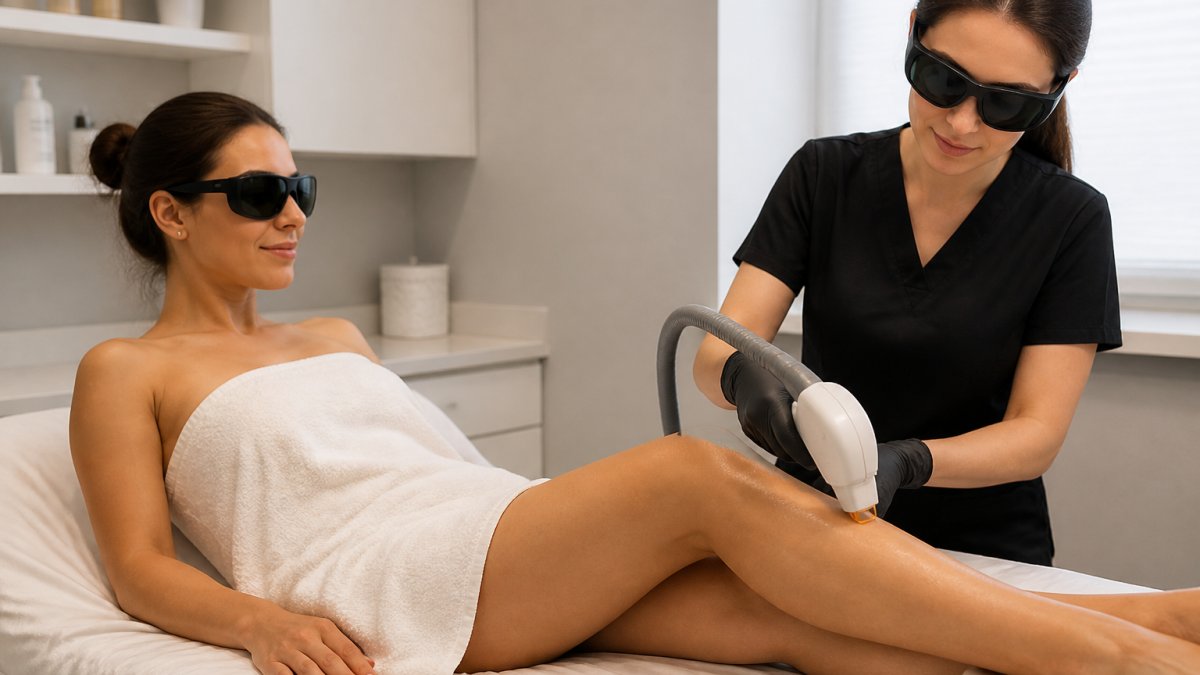
Most people compare it to a rubber-band snap against the skin. Each pulse is quick, and the feeling fades within a second. You may notice a warm tingle as the laser moves across the area.

The Rubber-Band Snap Sensation
That snap happens because the laser targets pigment in the hair follicle. The energy converts to heat, which is what damages the follicle and slows future growth. So the sensation is actually a sign the laser is doing its job.
A few things shape how strong that snap feels:
Hair thickness and density in the area
Your personal pain tolerance
The laser type and settings used
Whether the skin is cool before treatment
Thicker, darker hair absorbs more energy, so it can feel sharper. Finer hair often feels like a light flick.
How Pain Changes From Your First Session to Later Treatments
The first session usually feels the most intense. Hair is at its thickest and densest, so the laser has more pigment to target. As sessions continue, hair grows back thinner and sparser, and most clients say later treatments feel easier.
Repeat sessions also tend to go faster. Less hair means fewer pulses, which means less overall sensation. By the third or fourth visit, many clients describe the experience as mild.
Laser Hair Removal Pain by Body Area: A Practical Scale
Pain varies a lot by treatment area, and the reason is anatomical. Areas with thin skin, dense nerve endings, and hair follicles sitting close to the surface tend to feel sharper. Areas with thicker skin and a deeper follicle layer spread the sensation out, so the same laser pulse registers as milder.
Here is a practical scale, from most to least sensitive, with the mechanism behind each rating:
Sensitivity | Body Area | Why It Feels That Way | What Most People Report |
Very high | Bikini line, labia, scrotum | Thin skin, high nerve density, curved surface that concentrates the pulse | Sharp, quick snaps that make you tense |
High | Upper lip, chin, jawline | Thin skin over bone, dense follicle clusters | Hot pinches, sometimes watery eyes |
Medium-high | Underarms | Thin skin, curved crease, coarse hair | Warm pinches with occasional sharp spots |
Medium | Face (cheeks, sideburns), neck | Moderate skin thickness, mixed hair caliber | Light snaps, brief warmth |
Low-medium | Chest, stomach, back | Thicker skin, larger surface spreads heat | Mild warmth, occasional flick |
Low | Arms, legs, shoulders | Thick skin, deep follicles, coarse hair absorbs energy efficiently | Light flicks, easy to sit through |
Most Sensitive Areas vs. Most Tolerable Areas
The bikini line, labia, scrotum, upper lip, and chin top the sensitive list. The skin is thin, the nerve endings are dense, and in the case of the bikini line the surface curves, which can concentrate the pulse instead of letting it spread. Legs, arms, back, and shoulders are usually the easiest. The skin is thicker, the follicles sit deeper, and the sensation spreads across a larger area.
Your provider can adjust for sensitive spots. Lower energy with more passes, a smaller spot size, or a longer pulse duration often keeps things bearable without losing results. Some practitioners also use a chilled gel or a contact-cooling tip on these areas.
How Skin Tone, Hair Color, and Laser Type Change the Feeling
Two people can get the same area treated and describe very different pain. The variables that matter most:
Hair color and thickness. Dark, coarse hair absorbs more laser energy, so it can feel sharper. Fine or light hair absorbs less, which usually means less sensation but also a slower response.
Skin tone. Higher melanin in the skin competes with the hair follicle for energy. Practitioners using alexandrite or diode lasers on darker skin tones often lower the fluence and extend the pulse to protect the epidermis, which can feel more like steady warmth than a snap. Nd:YAG lasers are commonly chosen for deeper skin tones because they bypass surface melanin more effectively.
Laser type. Alexandrite (755 nm) and diode (800-810 nm) lasers tend to produce a sharper, snappier sensation. Nd:YAG (1064 nm) is often described as a duller, deeper warmth. The choice is not about which hurts less in the abstract, it is about which is safe and effective for your skin and hair combination.
Pulse duration and spot size. Longer pulses and larger spot sizes generally feel less sharp per pulse but may require more total passes.
A common pattern is that the same person rates the same area differently on two different devices. That is normal, and it is one reason a patch test before a full session is worth asking for.
Pro Tip If you have a darker skin tone or a mix of coarse and fine hair in one area, ask your provider which laser platform they plan to use and why. The answer tells you whether they are matching the device to your skin or running a one-size-fits-all protocol.
First Session vs. Later Sessions in the Same Area
The first session in any area usually feels the most intense. Hair is at its thickest and densest, so there is more pigment for the laser to target. As sessions continue, hair grows back thinner and sparser, and most clients say later treatments feel easier. Repeat sessions also tend to go faster because there are fewer pulses overall. By the third or fourth visit, many clients describe the experience as mild.
How to Reduce Pain During Laser Hair Removal
A few simple steps make sessions more comfortable. You do not need to tough it out.
Skip caffeine on treatment day. It can make you jittery and more sensitive.
Eat a light meal beforehand. Going in on an empty stomach can make you feel lightheaded.
Shave the area 24 hours before. It reduces surface hair and keeps the laser focused on the follicle.
Avoid sun exposure for a week before. Tanned skin is more sensitive.
Ask about numbing cream. Many providers offer it for sensitive areas.
Pro Tip Book sessions when you are well rested. Being tired or stressed can lower your pain tolerance more than most people realize.
What to Do If a Session Feels Too Painful
Speak up. Your provider can pause, lower the laser settings, or add more cooling. There is no prize for enduring a session at full power.
If a specific spot feels sharp, ask for a break. Discomfort should stay mild to moderate, never sharp enough to make you flinch repeatedly. A good provider will always adjust to keep you comfortable.
Laser Hair Removal Aftercare: Managing Warmth and Tenderness
Mild warmth and redness after treatment are normal. They usually fade within a few hours. Some clients notice small red bumps around the follicles, which settle on their own.
To keep the area calm:
Apply a cool compress if the skin feels warm
Skip hot showers, saunas, and intense workouts for 24 hours
Avoid direct sun and use sunscreen on exposed areas
Do not scratch or pick at any bumps
Watch Out Skip waxing, plucking, or threading between sessions. These pull hair from the follicle and undo the laser's progress, which can set your results back weeks.
Call your provider if you notice blistering, spreading redness, or pain that gets worse after a day. These are uncommon, but worth a quick check.
How Laser Hair Removal Compares to Waxing and Epilating
Waxing pulls hair out by the root all at once, which many people find sharply painful, especially in sensitive areas. Epilating does the same, one hair at a time, and can feel even more intense.
Laser hair removal feels different. Instead of one big pull, you get a series of quick snaps over a few minutes. Most clients find it more bearable than waxing, and the results build over time rather than lasting a few weeks.
Method | Sensation | How Long Results Last |
Laser | Quick snaps, mild warmth | Long-term hair reduction |
Waxing | Sharp pull, brief sting | 2-4 weeks |
Epilating | Repeated pinches | 2-4 weeks |
Shaving | None | 1-3 days |
The trade-off is simple. Laser takes a few sessions to build results, but it reduces hair over the long run. Waxing and epilating give instant smoothness, but you repeat the discomfort every few weeks.
Our clients often tell us the difference is worth it. One shared: "I finished my sessions for underarm laser with Ksenia and I've never been more obsessed." Another noted the Brazilian wax here was the most painless they had ever had.
Discomfort during laser hair removal is real, but it is short and manageable, and it fades as your sessions progress. The bigger challenge is choosing a provider who tailors settings to your skin and hair type. At LUX LASER MED SPA, we use precision lasers that target hair follicles while protecting the surrounding skin, and we build a personalized plan for every client. Our team is committed to honesty and comfort at every visit. Book your consultation and find out how smooth, low-maintenance skin can feel.
Frequently Asked Questions
Does laser hair removal hurt more during the first session?
The first session often feels the most noticeable because the densest, coarsest hair is still present and each follicle absorbs more laser energy. As sessions continue, hair grows back thinner and sparser, so there is less rooted hair for the laser to target. Many clients describe later sessions as quicker and more comfortable than the first. Your provider can adjust laser settings at any point if a session feels stronger than you expected.
How long does discomfort last after laser hair removal?
Most people notice temporary warmth, mild redness, or small red bumps in the treated area for a few hours after a session. Sensitive areas like the bikini line may feel tender for up to a day. Cooling the skin with a cold compress and avoiding heat, hot showers, and intense exercise for the rest of the day helps. If redness or swelling lasts beyond two to three days, contact your provider.
Can I do anything before my appointment to make laser hair removal less painful?
Yes. Shave the treatment area the day before rather than the day of, since shaving too close to your session can irritate skin. Skip caffeine and alcohol beforehand, stay hydrated, and eat a light meal so you are not dealing with hunger on top of discomfort. Arrive with clean skin, free of lotions, deodorant, or self-tanner. Ask your provider whether a numbing cream is appropriate for your treatment area and skin type.
Is laser hair removal more painful than waxing?
Most clients find laser hair removal more tolerable than waxing. Waxing pulls hair out at the root in one quick motion, which many people rate as sharper and more intense. Laser sessions feel like a rubber-band snap or brief pinprick with each pulse, and modern devices often include built-in cooling. Because laser discomfort is brief and spread across the session, most clients describe it as bearable, especially compared with the anticipation and after-effects of a wax.
BOOK NOW
Comments